History
In the fall of 1992, Kay and Jim Charter realized that many of their favorite bird species were in decline. Migrating species like Baltimore Orioles, Scarlet Tanagers, Indigo Buntings, and a variety of precious warblers were losing ground every year. Unwilling to stand by helplessly and watch the downward slide of these beautiful creatures, the Charters decided to take action. In February 1993, they sold what had been their "forever" lakefront home in Northport, Michigan and used the proceeds to buy a 47-acre tract just west of nearby Omena Village. The land was desirable because of its diverse habitat that would provide a safe haven for the feathered jewels they loved.
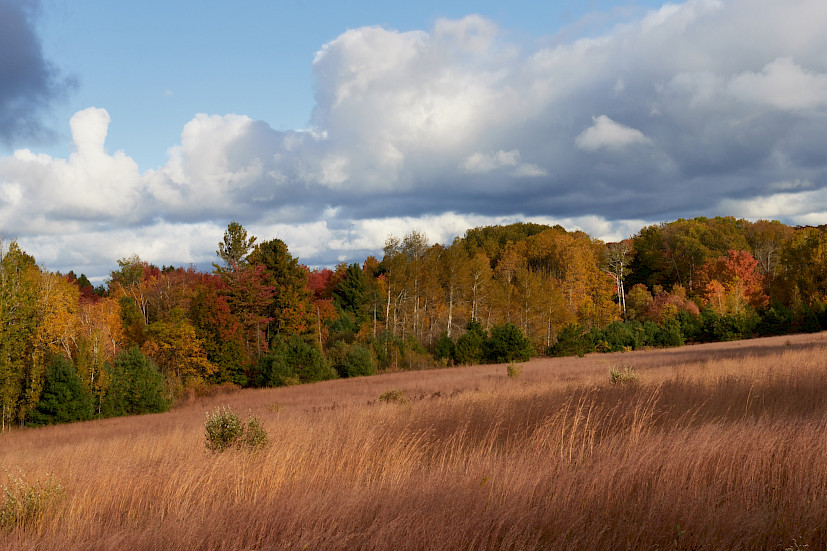
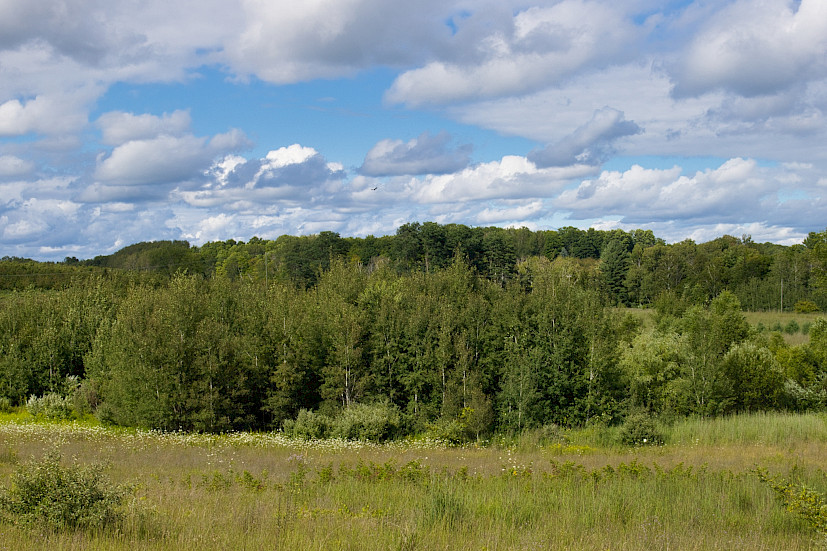
The Charters worked hard to enhance the existing native plant-based ecosystems on their new property, desiring to provide healthy habitat for migratory, nesting, and resident birds long into the future. The entire Charter Sanctuary has been "forever" protected for birds through several conservation easements. The land includes a quarter mile of creek running through a wetland filled with cattails, willows and dogwoods. A mixed hardwood/conifer forest grows up the hill on the east side of the wetland, and a narrow belt of aspen woods lines the southern edge of the property.
The Charters also took an aggressive approach in converting part of their less desirable land to tall grassland prairie to help endangered birds requiring such habitat for nesting, like the bobolink. Later, an image of a bobolink would serve as the first logo for the new organization they were to found.
In 2001, about eight years after purchasing their sanctuary for birds, Kay and Jim Charter, along with Bobbie Poor, Marlin Bussey and Anne Stanton, founded Saving Birds Thru Habitat (SBTH). It was Bobbie, a long-time educator, who suggested to Kay to found an organization that would support her efforts to teach others about birds and the threats to their survival. Kay had been giving free lessons, guided tours, presentations, and the like (sometimes in the confines of her and Jim's pole barn). In Kay's words, the vision for the organization became to "help stem the decline of our migratory songbird populations by teaching people of all ages how to protect, enhance and restore habitat for North American birds." The organization continues to be dedicated to the cause of educating others about the challenges facing birds and helping to address those concerns.
Two years after the organization's founding, the Charters deeded two acres of their land to create a home for SBTH. Soon after that, Jim Charter headed up a group of volunteers from the local community and from around the country to erect a building to call "home," Habitat Discovery Center, as it was dedicated during a ceremony in 2003, drawing over 300 attendees. Volunteers, many over the age of 60 (as were Kay and Jim), dug in to plant native trees, shrubs, forbs, and other plants on the surrounding grounds. The Charters later deeded additional land to the organization, expanding it to its existing three acres.
The Habitat Discovery Center is adjacent to Charter Sanctuary, a private wildlife conservation property. The sanctuary has hosted more than sixty nesting bird species and provides habitat for an additional hundred that forage for food during migration. "My life is wrapped up in birds," Kay has said. "I firmly believe that if we save our birds, we save everything else in the process."
Habitat that is life-sustaining for birds is great for just about every other species on the planet. The Habitat Discovery Center grounds is a tangible ongoing project to enhance and restore habitat for birds, their pollinator allies, and other animals who live there. It serves as a destination to observe and learn about native plants, as a site for training opportunities and education, and a place to identify and enjoy birds, butterflies, and blooms.
Brian Price, former Leelanau Conservancy Executive Director who retired in 2014, was inspired by the Charters. About them, he has said, "Kay and Jim are those rare people that live their beliefs and changed their lives to come into conformity with the things that most matter to them."
Sadly, Jim Charter passed away on Easter Sunday in 2017. In late November 2023, at age 86, Kay retired after having been the organization's only Executive Director.
Following the retirement of Kay Charter, as a Founder and only Executive Director of Saving Birds Thru Habitat, the organization is in transition. All former Board of Directors left before or soon after Kay's announcement, and Mike Berst, now President and Acting Director, was asked by Kay to establish a new Board. Notably, Kay envisioned that Mike would advance the organization's conservation education, given his wealth of knowledge about native plants. Mike has been propagating native plants for years and prioritizes working with local genotypes.
To make a continuing tangible impact, transitional habitat enhancement efforts have focused on the grounds around the Discovery Center. Labor-intensive activities include removing invasive species, installing native plants, and creating demonstration gardens pathways. This work will directly benefit migratory and resident bird species endemic to our geographic area. The demonstration gardens will be a regional resource for people to learn about the crucial role of native plants in the survival of birds and their pollinator allies.
The Michigan Natural Features Inventory guides our selection of forbs, ferns, graminoids, shrubs and trees that represent a diversity of natural communities occurring in Northern Lower Michigan. Installing thousands of native plants, representing more than a hundred species, is a huge undertaking. Hard labor involving digging, planting, and moving heavy materials, such as sand and gravel, is required. In became clear toward the end of 2024 that available volunteer help would be inadequate to the task. Consequently, in partnership with the SEEDS non-profit organization, a paid work corps of young adults (at a discounted rate) was engaged. By attracting this younger "green collar" cohort though SEEDS, we have been offering early career, hands-on training in habitat restoration, as well as getting more work done at the Discovery Center.!

Aldo Leopold, an American writer and naturalist, wrote: "A thing is right when it tends to preserve the integrity, stability and beauty of the biotic community. It is wrong when it tends otherwise." The Discovery Center's grounds need healing; habitat enhancement is essential. We foresee that the project to restore the grounds surrounding the Discovery Center will help to rejuvenate Saving Birds Thru Habitat, an organization that has long been an important regional asset: a center for community involvement, inspiration, and conservation education. center for community involvement, inspiration, and conservation education.
“What propelled Saving Birds Thru Habitat to the short pile of the French Foundation's favorite grantees was the lessons it teaches. Not that the actual on-the-ground habitat work isn’t impressive and important, but showing the public the value of that work magnifies the contribution a thousand-fold. We consider Saving Birds Thru Habitat one of our very best investments for wildlife.”
— Ted Williams
Author of The Insightful Sportsman, Wild Moments, and Earth Almanac