On the Frying Pan
The Fryingpan River rises high on the west side of the Continental Divide, flowing out of the Elk Mountains and through the heart of the Hunter–Fryingpan Wilderness before bending north toward the Roaring Fork. Much of its upper course runs through steep, forested country shaped by ice, water, and long winters—quiet terrain where access is limited, distances are deceptive, and the land still dictates the terms of movement.
When I drove on Frying Pan Road for the first time, I quickly realized that we were on an old railroad roadbed. The clues were everywhere: the broad, deliberate curves cut into the hillside, the subtle superelevation, and now and then an ancient pile of cinders, or a rusted spike or tie plate half-hidden in the dirt. I assumed it must have been an abandoned mining railroad—there were plenty of those in Colorado. There's a small local oddity in the naming here, akin to the Mackinac versus Mackinaw divide: Fryingpan is the river, Frying Pan the road.
My cousin—something of a daredevil—and I had driven all the way up the old grade near the Hagerman Tunnel. We went slowly, but we went. At the time it felt like curiosity, maybe even respect for the place. I admit I was scared half to death for most of the trip. My cousin kept saying, “No problem,” as we inched along.
On that first visit to the area, I stopped at a little hole-in-the-wall general store. There wasn't much there for sale. In fact, there was only one book on the rack—one copy, and it was the only title they carried: Colorado Midland, by Morris Cafky. I glanced through the book and exclaimed to the store owner, “The Colorado Midland ran right through here!” He responded, “Yep.” No wonder the grading was so extensive. This had been a major Class I railroad at one time.
The Colorado Midland Railway ran from Colorado Springs to Grand Junction, crossing the Continental Divide via Hagerman Pass and following the Fryingpan River down the west slope. By 1918 the line was abandoned. Winters at elevation were simply too harsh to keep it open, and in the end the railroad lost out to competing lines.
There are accounts that many of the men who built this line—Chinese immigrant laborers working in brutal conditions at elevation—did not survive. Their deaths were rarely recorded, and some are believed to have been buried near the tunnel itself, in unmarked ground.
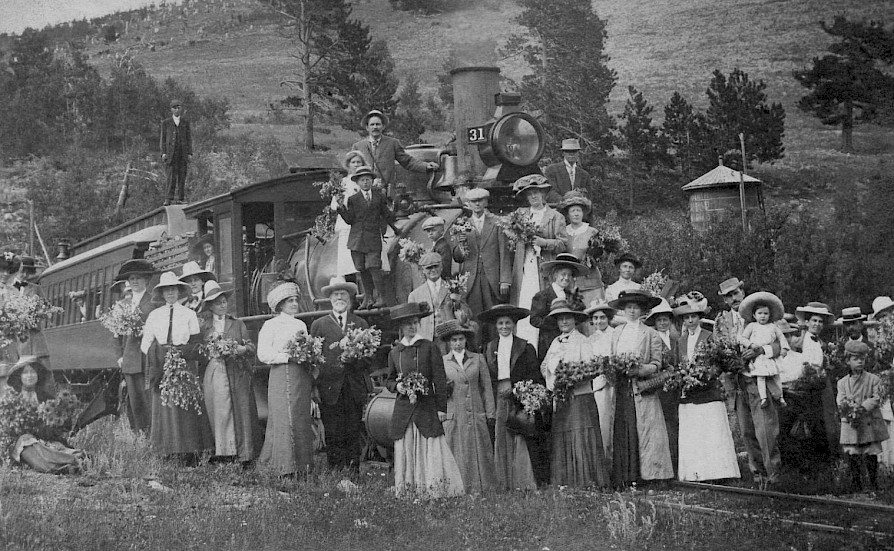
In the early years, the Colorado Midland Railway ran wildflower excursion trains that carried passengers up the Frying Pan into mountain meadows at the height of the spring wildflower bloom. The railroad even advertised and ran special dedicated excursions for that sole purpose. Theodore Roosevelt rode one of those trains, coming up simply to see the alpine wildflowers.
A few years later I returned with my wife Kathie. We made it partway up before she balked at one of the narrower, more exposed stretches. I looked ahead, then back behind us, and agreed. We turned around. It is rugged, with no guardrails and little clearance between sheer rock walls and precipitous drops to the valley floor.
One balmy summer day Kathie and I were back, photographing plants and bird-watching along the Fryingpan. We drove up the valley beside the river, stopping frequently, and finally pulled into a small parking lot. There were a half dozen guys fishing, all equipped with the de rigueur accoutrements of Rocky Mountain trout angling: a pickup truck parked in the gravel turnout, waders, a creel slung over a shoulder, a fly rod and reel leaning against a tailgate, a six-pack of Bud in a small cooler, and a Lab or Golden wandering back and forth between the river and the parking lot.
The dogs came over one by one to give us a friendly greeting. I unloaded my camera gear, and we started walking along the river.
I spent the day on my knees and elbows, moving slowly along the bank. They stood in the water, watching for rises. Every now and then one of them would glance in my direction—the quick look of someone curious but not wanting to seem curious. I stayed focused on what I was doing, but stopped periodically to watch the fishing drama. I remember the different Penstemons, the seep-loving Monkeyflower (Mimulus guttatus), broad swaths of Mule’s Ears (Wyethia amplexicaulis), the deep blues of Gentians, and several species of Paintbrush, each tied to a slightly different place along the grade.
I admired the patience and grace of the anglers there. They stood in cold, rushing water for hours, attentive and unhurried, casting a fly in a wide arc and dropping it precisely onto the surface. My own trout fishing experience consists mostly of catching leaves and branches, and occasionally the seat of my pants.
The Frying Pan is a river that encourages that kind of division of attention. It is cold, clear, and famous—a tailwater flowing out of high country, carefully managed, heavily fished. The trout here grow large and wary. People come with specialized gear, refined technique, and a great deal of expectation. Most of the attention is fixed on the water’s surface, on subtle changes in current, light, and shadow.
At one point during the day a Western Tanager appeared very close to us, hopping on the gravel. So colorful—yellow body, red face, black wings. Western Tanagers often strike me as migrants that took a wrong turn and never bothered to correct it. They pass through quietly, often high in the canopy, and then they're gone. Seeing one up close felt less like spotting a rarity and more like being briefly let in on a secret.
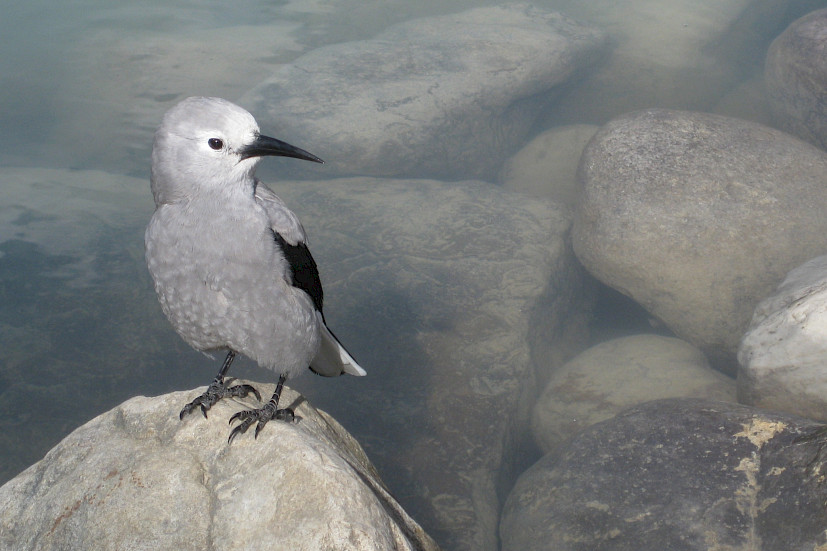
Later, a Clark’s Nutcracker moved through the valley, calling before it came into view. Nutcrackers have a very different presence—loud, purposeful, almost managerial. They belong to higher, harsher places, and when they pass through lower elevations it feels temporary, businesslike. This one crossed the river without hesitation, its white-edged wings flashing, then disappeared upslope.
Toward the end of the afternoon, we drifted back to the gravel parking lot to load up and head home. Finally, one of the guys asked, “So what were you up to here today?”
“Photographing native plants,” I said.
Everyone turned toward me with the same questioning look.
At my feet, the explanation was already at hand. I pointed down and said, “You can see right here Spotted knapweed, which is alien, and over here is Engelmann aster, which is native.”
Spotted knapweed is a familiar presence in all sorts of places—aggressive, well-adapted to disturbance, spreading quickly along roadsides, trails, and riverbanks. It looks successful. But it is an ecological dead end. Most native insects have no relationship with it, no history with it, no reason to use it. It occupies space and resources efficiently while contributing very little.
Engelmann aster is the opposite. In bloom it is hard to miss—tall, with large white blossoms, often growing right along the edge of the water. My first encounter with it was years earlier along a stream bank at Maroon Bells near Aspen. In the G. K. Guennel Guide to Colorado Wildflowers, it is described as a plant of wet stream banks, growing up to five feet tall with large white blossoms. Up close, its flowers were active with small bees, flies, and other insects moving steadily from plant to plant.
Here I got lucky. I knew that land-based insects often make up the bulk of a trout’s diet for many months of the year. I looked down more closely. The aster was alive with insects—pollinators, inchworms, even a crab spider. The knapweed beside it had none. I pointed that out. They still looked confused.
Then I said, “No native plants, no insects. No insects, no trout.”
“Ah, sure,” he said. “Makes sense.” Heads tilted, they all stood there quietly for a moment, looking back toward the water, and then went back to packing.
We loaded up and headed out.