The Place We Keep Running To
When I was about twelve, a half dozen of us were riding our bikes through the woods outside of Detroit, following a dirt road we knew well. We saw Brown Thrashers and Towhees along the way. Snakes, salamanders, turtles—things that were simply part of the world then, close to home, close enough to reach on a bike.
We came to a clearing we had never seen before. It was a huge east–west gash through the woods, perhaps a hundred yards wide. It hadn't been there the summer before. We stopped and sat in the shade, stunned, trying to understand what we were looking at.
“They're digging a canal from Lake St. Clair,” one boy said.
“Yeah, to where?” someone else replied.
Another said it was a rocket ship landing strip. We were twelve, and it was the 1960s.
We had never seen anything like it. And astonishingly—since twelve-year-old boys can imagine almost anything—it was outside not only our experience, but outside of our imagination as well.
Our parents later told us that it was a highway that was being built. But that couldn't be right either. It was far too wide.
“A highway to where?” we asked.
“All the way to the Mackinac Straits,” they said.
That didn’t make any sense. The Straits were north. This ran east and west. The grown-ups were probably mistaken.
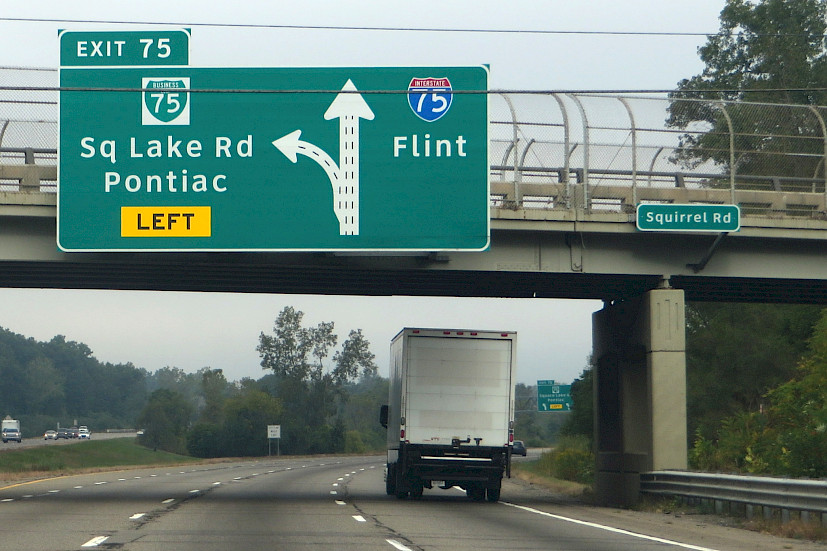
We were on Squirrel Road just north of Square Lake Road, about 20 miles from downtown Detroit. That ditch? It was to become Interstate 75.
At the time, none of us could have said exactly why it felt so strange and out of place. We just knew that it did. Something continuous had been cut clean through, between one summer and the next, by some logic we couldn’t understand.
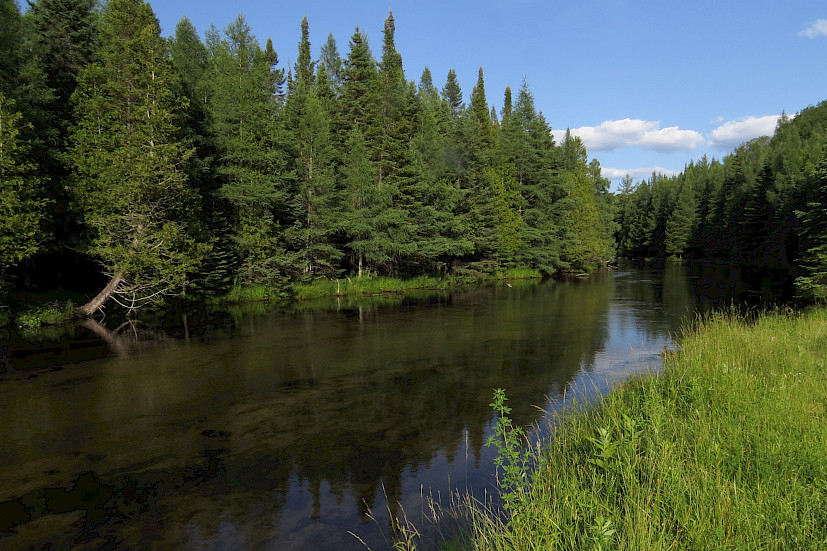
A couple of years ago I was standing on a bridge over the Jordan River on a bright, clear day. Cedar Waxwings were darting after insects over the water. I don’t remember exactly what was blooming—maybe Marsh marigold—but I remember the understory: Poison ivy, Virginia creeper, Calico aster, Meadow rue. Different shapes, different shades of green, an intricate tapestry beneath the canopy.
After a while, a young woman came and stood nearby. We watched together for a few minutes—the rushing water, the sky, the breeze, the plants along the bank.
Then she said, quietly, “I’d love to build a house right here someday.”
I said, “There was probably a time when someone stood on the exact spot where your house is now and said the same thing.”
There was a long pause. Then she said, “maybe leave this as it is?”
You hear it all the time—people need housing, people want comfort, there's nothing wrong with that. And it's true—as far as it goes. But it stops just short of the truth.
People can have shelter and a decent life without tearing places apart. Humans have done so for most of our existence. What destroys places is not need.
We are constantly presented with a false choice: human needs or nature? Choose one. No. It is both—or it is neither. Anything else is illusion.
When I was a child, I could ride my bike from Detroit to places as full of life as the Jordan River. Snakes, salamanders, turtles—whole communities that are now almost impossible to find nearby.
The population hasn’t grown dramatically since then. People aren’t happier. They aren’t more secure.
So when we're told, “We're just giving people what they want,” it doesn't hold up to scrutiny. If people were actually getting what they need, they wouldn't be so desperate to escape where they already live.
That's the cruel symmetry of it all: the same highway that cut through those woods now carries people north to the remaining intact places, where they can feel—briefly—what life once felt like, and say, “I wish I lived right here.”
The longing is real. But it comes after the loss. And then we follow it. We go looking for what’s left. Roads lead there. Houses follow. Stores, parking lots—everything that makes it easier to get there. And before long, the place begins to resemble the one we left behind.
Birds don't respond to our intentions. They answer one question only: does this arrangement work? When it does, they show up. When it doesn't, they leave.
We aren't so different.
The answer is not to keep running to the last few relatively intact places.
The answer lies in repairing the places where we already are—yards, neighborhoods, field edges, forgotten corners—so that life can afford to stay.