
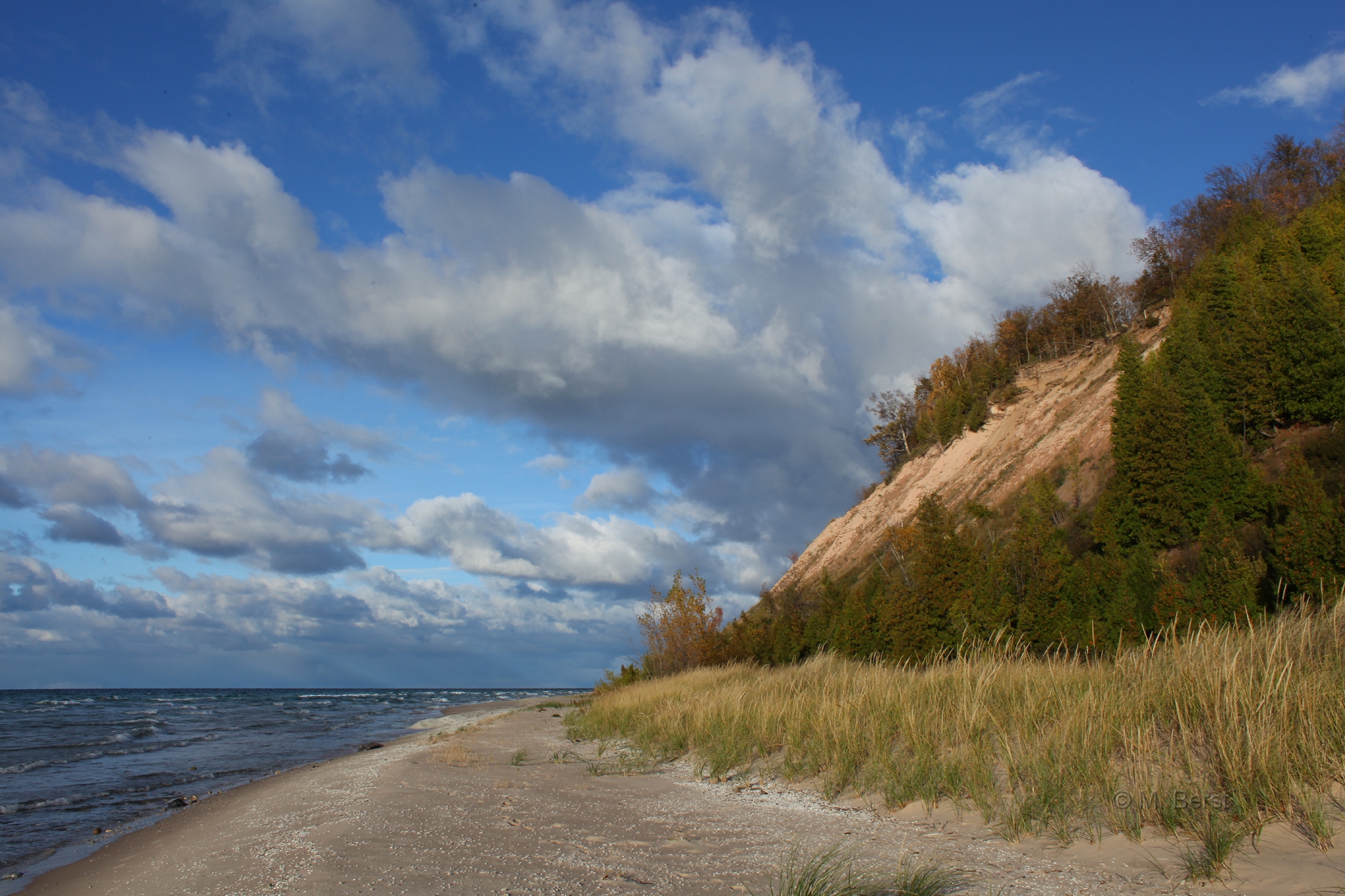
photo by Mike Berst
Michigan's Sleeping Bear Birding Trail spans an important migratory flyway and thousands of public acres along or near the Lake Michigan coastline and its arm, Grand Traverse Bay, that is separated from the rest of Lake Michigan by the Leelanau Peninsula. Anchored by Sleeping Bear Dunes National Lakeshore, a large section of the Sleeping Bear Birding Trail follows the M-22 corridor from Manistee to Northport but extends a bit south of Manistee and north to Leelanau State Park at the northern tip of the Leelanau Peninsula. Other locations are along or near both shorelines of Grand Traverse Bay, from Northport around the bay to Charlevoix, "sister cities" across the bay that they share.
The diverse habitats and broad public access at trail locations (under various federal, state, county, township, city, and non-profit nature conservancy jurisdictions) make this one of the most rewarding birding regions in Michigan. Visitors can experience a remarkable variety of scenic landscapes and also observe the birds that depend on their associated habitats. The locations selected for the trail were selected and have been updated in order not only to direct people to places to observe birds but also to become more familiar with a variety of intact quality bird habitats required to help stem the decline of bird populations due to the loss of habitat.
Read about the various locations on the trail →
Sleeping Bear Dunes
Sleeping Bear Dunes National Lakeshore is both a National Park and an important bird area, with 71,000 acres of public land and 35 miles of beaches. The park outlines the northwest shoreline and the “little finger” of Michigan’s mitten-shaped Lower Peninsula. The variety of habitat found here, together with the public access and miles of shoreline, makes this a birder’s paradise. The park outlines the northwest shoreline and the "little finger" of Michigan's mitten-shaped Lower Peninsula.
From forests, wetlands, beaches, and other quality native habitats the trail offers a remarkable range of places to explore. There is a great deal to experience, both for dedicated birders and for visitors simply hoping to spend time in scenic landscapes that happen to be rich in birds and, as a result, better appreciate important connections in nature.
Piping Plovers
Various locations along the Sleeping Bear Birding Trail are home to the Piping Plover, an endangered shorebird that requires wide stretches of undisturbed beach for nesting. Piping Plovers are sand-colored on the back and white below. During the breeding season, adults have a black forehead band between the eyes and a single black band around the neck. Their larger relative, the Killdeer, is commonly seen at parks, playgrounds, and golf courses and has two dark bands around the neck.
Piping Plovers nest only on beaches and prefer beaches with cobble. There are three small populations: one in the Great Plains, one on the Atlantic Coast, and one here in the Great Lakes. They winter together along the Gulf Coast, then return to their separate breeding areas each spring. It is a special opportunity to observe Piping Plovers here, since there are only about 50 to 60 nesting pairs in the entire Great Lakes region and fewer than 5,000 individuals worldwide.
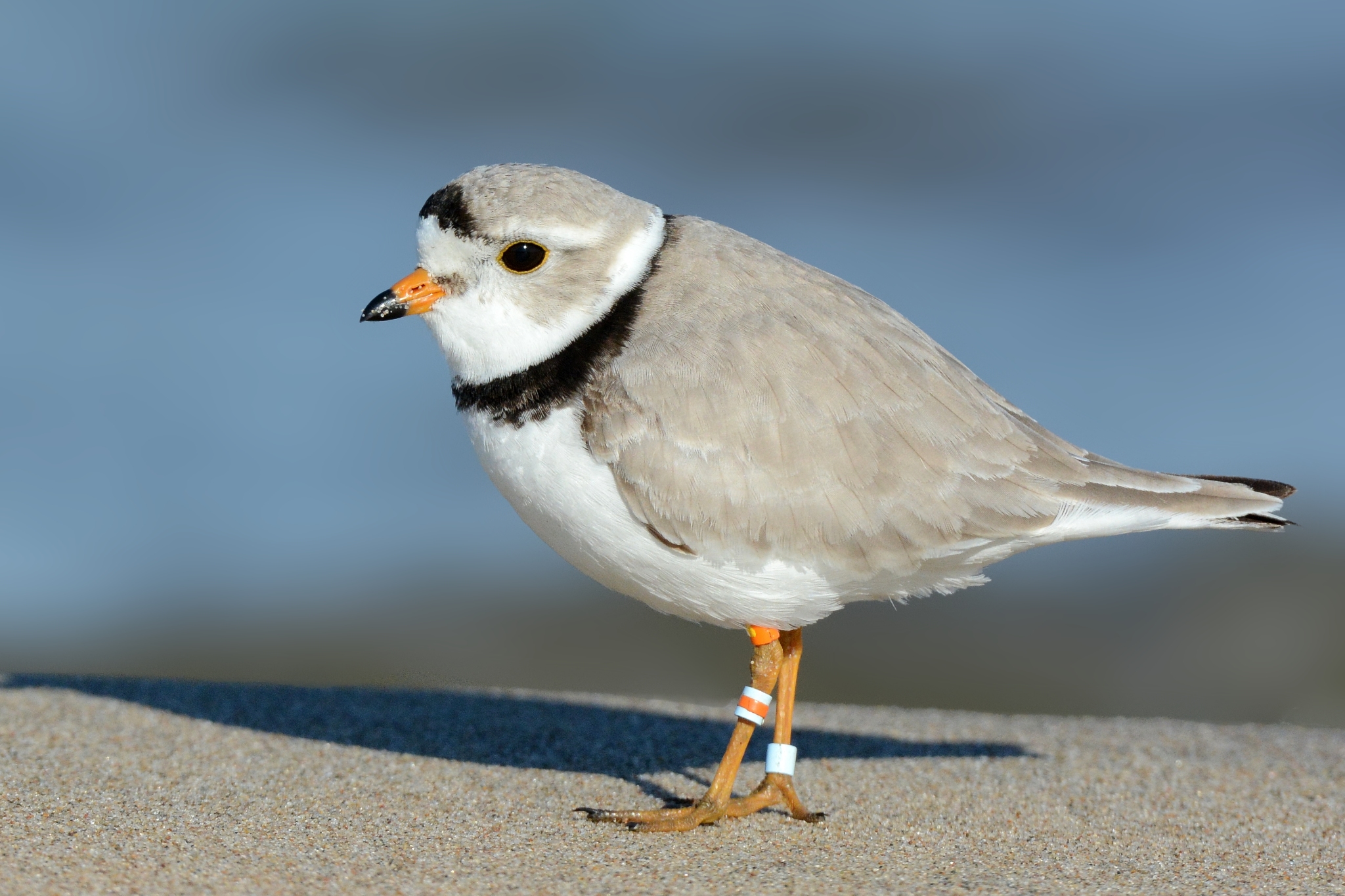
Photo by Jim Hudgins/USFWS public domain
Please help protect them
Please observe and obey closed-area fencing and enjoy Piping Plovers from a respectful distance. Keep dogs and other pets on leashes and out of areas of the beach that are closed to pets. Do not feed gulls or leave food on the beach, since that increases gull numbers and attracts predators that may also threaten plovers and their chicks.
If you encounter a Plover family outside the fencing, give them plenty of space. The chicks are very small, well camouflaged, and can disappear quickly in sand or cobble. They are easily stepped on if visitors are not paying attention.
If you see anyone harassing Piping Plovers, please report it to Sleeping Bear Dunes National Lakeshore headquarters at (231) 326-5134.
For more detailed information about Piping Plovers, visit the National Park Service page: Piping Plover information from Sleeping Bear Dunes National Lakeshore.